Take the files
Eight SVGs and matching 4× PNGs. Free to use on any book that keeps the promise and prints the credit — no permission, no registration, no fee. Click any tile to download the SVG; the PNG link sits beneath it.
Which file, and when
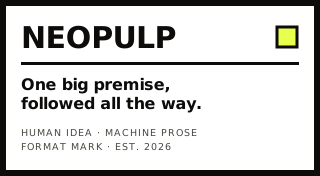
STAMP-FULL
Back covers, title pages, print at 34mm and up. The only version that carries the promise.
SVG ↓PNG 4×
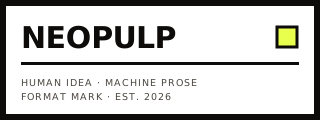
STAMP-COMPACT
22–34mm. Front covers with room to spare. Promise drops, disclosure stays.
SVG ↓PNG 4×

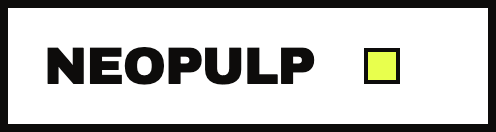


WORDMARK-BLACK
The word itself, light backgrounds. For writing about the format — sites, posters, decks.
SVG ↓PNG 4×


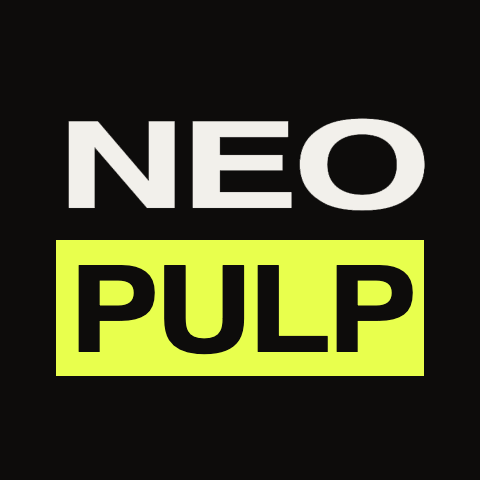
WORDMARK-REVERSED
Dark backgrounds. NEO turns white, PULP stays black on acid — that pairing never inverts.
SVG ↓PNG 4×


WORDMARK-MONO
One-ink print, foil, emboss, copyright pages. No highlight available at all.
SVG ↓PNG 4×

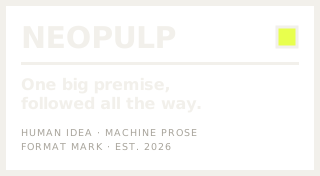
STAMP-FULL-REVERSED
The full stamp for dark covers. Same geometry, stock-white keyline.
SVG ↓
SVG or PNG?
SVG for anything printed or resized. PNG at 4× for slides, social, and storefronts that reject vectors. Never scale a PNG up.
Before the printer
Convert type to outlines. Widths are pinned in the SVG so lockups hold their proportions even where Archivo isn't installed — but outlines are safer.
Typefaces
Archivo and JetBrains Mono, both open-licence and free. Your book's interior can be set in anything; only the mark is fixed.